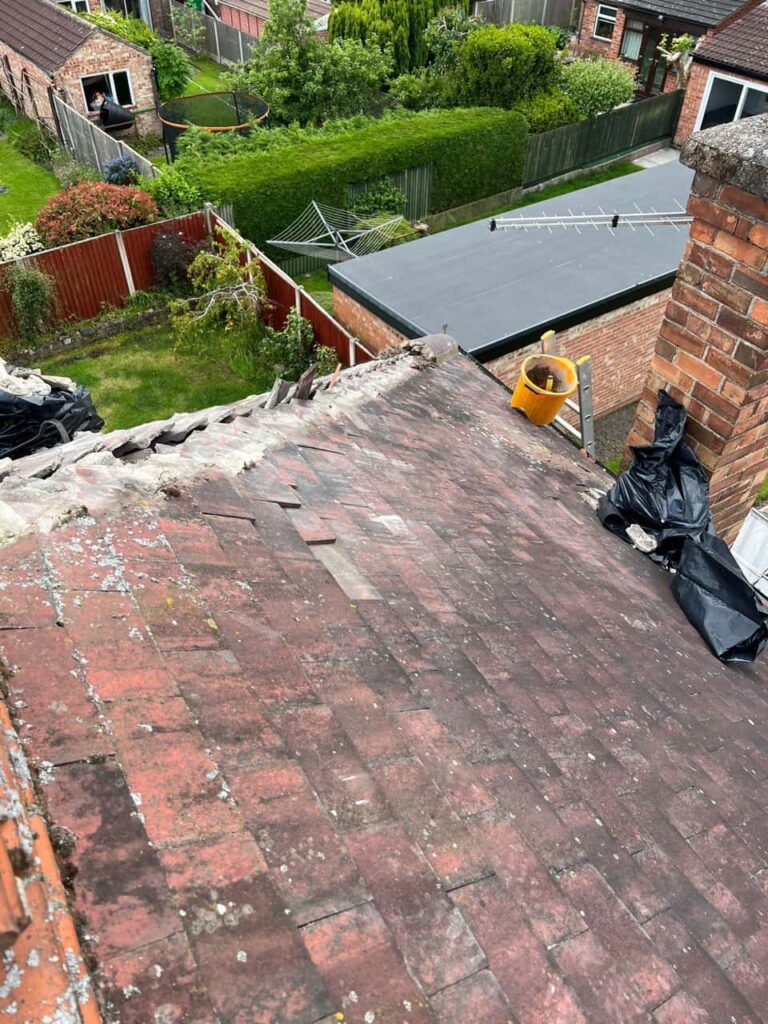
When a Local Felt Roof Repair May Be the Right Solution
A damaged felt roof does not always need to be replaced in full. If the defect is confined to one area and the surrounding roof remains stable, a professional repair may restore its waterproof performance. The correct approach depends on the type of damage, the condition of the supporting deck and whether water has travelled beyond the visible fault.
For property owners in Histon, Cambridgeshire, an accurate roof assessment is the best way to distinguish an isolated problem from wider deterioration.
What Types of Felt Roof Damage Can Be Repaired?
Local repairs may be suitable for several common defects, including:
- Small punctures or tears
- A limited split in the felt
- Lifted edges or laps
- Localised blistering
- Damage around an outlet or roof penetration
- A failed joint
- Minor deterioration at the roof perimeter
A repair generally involves preparing the affected section and reinstating a watertight covering that bonds correctly with the existing roof. The exact method should suit both the roofing material and the cause of the damage.
When Is a Local Repair Most Likely to Work?
A targeted repair is more likely to provide a reliable result when:
- The damage is limited to a clearly defined area
- The surrounding felt remains firmly bonded
- The roof deck is dry and structurally sound
- Water is draining away correctly
- There are no widespread cracks or blisters
- The roof has not been repeatedly repaired
- The source of the leak can be identified accurately
The condition around the visible defect is important. A small split can often be repaired, but not if the adjoining felt has become brittle, loose or extensively weathered.
Why the Visible Leak May Not Reveal the Full Problem
Water can enter through one opening and travel beneath the felt before appearing inside the building. The internal damp patch may therefore be some distance from the original defect.
Moisture can move along the roof deck, collect around joints or become trapped beneath the covering. For this reason, simply patching the area above an internal stain may not stop the leak.
A proper inspection should trace the likely route of water and check adjoining details such as roof edges, outlets, upstands, joints and penetrations.
What Does Blistering Mean?
A blister forms when air or moisture becomes trapped beneath the felt and expands. One small, stable blister may be repairable, particularly if the surrounding covering remains secure.
Multiple blisters can indicate poor adhesion, trapped moisture or more extensive separation between the felt and roof deck. In these circumstances, repairing each blister individually may not address the underlying problem.
Blisters should not be punctured without proper assessment, as this can create a direct route for rainwater into the roof system.
Can a Split Felt Roof Be Patched?
A localised split can often be repaired if the surrounding material is still flexible and the roof deck has not deteriorated. However, the reason for the split must be considered.
Felt may split because of:
- Movement within the roof structure
- Temperature-related expansion and contraction
- Stress around joints or edges
- Poor adhesion
- Water trapped beneath the surface
- Age-related brittleness
- Impact damage
If movement continues beneath the repair, the felt may split again. The affected area must therefore be stabilised and prepared correctly before new material is applied.
The Importance of the Roof Deck
The waterproof covering is only part of a felt roof. Beneath it sits the roof deck, which provides essential support. Persistent leaks can allow the deck to become damp, soft or distorted.
A local repair may be unsuitable if the deck:
- Feels soft beneath the covering
- Has begun to sag
- Shows signs of moisture damage
- Has lost its stability
- Is affected across a wide area
Applying new felt over a weakened deck will not restore the roof’s structural support. Damaged sections may need to be exposed and replaced before the waterproof layer can be reinstated.
How Drainage Affects the Decision
Flat and low-pitched felt roofs should direct rainwater towards suitable drainage points. If the surface contains low areas, water may remain after rainfall and place additional strain on joints and previous repairs.
Signs of drainage problems include:
- Persistent pools of standing water
- Debris collecting in the same low areas
- Repeated leaks near an outlet
- Dark staining around ponded sections
- Sagging or uneven roof surfaces
Repairing a leak without considering poor drainage can allow the problem to return. The roof’s falls and outlets should be examined as part of the assessment.
When Might More Extensive Work Be Needed?
Repairing one section may not be appropriate when deterioration affects much of the roof. More extensive work may be required if:
- Cracking is widespread
- Large areas of felt are lifting
- Several leaks are present
- Blistering affects multiple sections
- The deck has deteriorated
- Repairs repeatedly fail
- The covering has become brittle throughout
- Drainage problems have affected the roof structure
In these situations, continuing to patch individual defects may leave other vulnerable areas untreated. Partial renewal or complete replacement may provide a more dependable outcome, depending on the extent of the damage.
Why Professional Diagnosis Matters
The success of a felt roof repair depends on treating the cause rather than covering the most obvious symptom. A professional assessment may consider:
- The location and extent of visible damage
- The condition of adjoining felt
- Whether moisture is trapped beneath the covering
- The stability of the roof deck
- Joints, edges and penetrations
- Drainage performance
- The history of previous repairs
This evidence helps determine whether a local repair is likely to last or whether broader work is justified.
Conclusion
A damaged felt roof can often be repaired without replacing the entire roof when the defect is localised, the surrounding covering remains sound and the roof deck is stable. Widespread cracking, recurring leaks, poor drainage or deterioration beneath the felt may indicate that more extensive work is needed.
If you have noticed a leak, split or blister on a felt roof, Histon Roofing Repairs can assess the affected area and recommend an appropriate solution. A careful inspection can help ensure that the work addresses the underlying problem without replacing more of the roof than necessary.
Call us on: 01223 948 995
Click here to find out more about Histon Roofing Repairs
Click here to complete our contact form and see how we can help with your roofing needs.